Lorry Loader (HIAB) Lift Plans: UK LOLER Guide
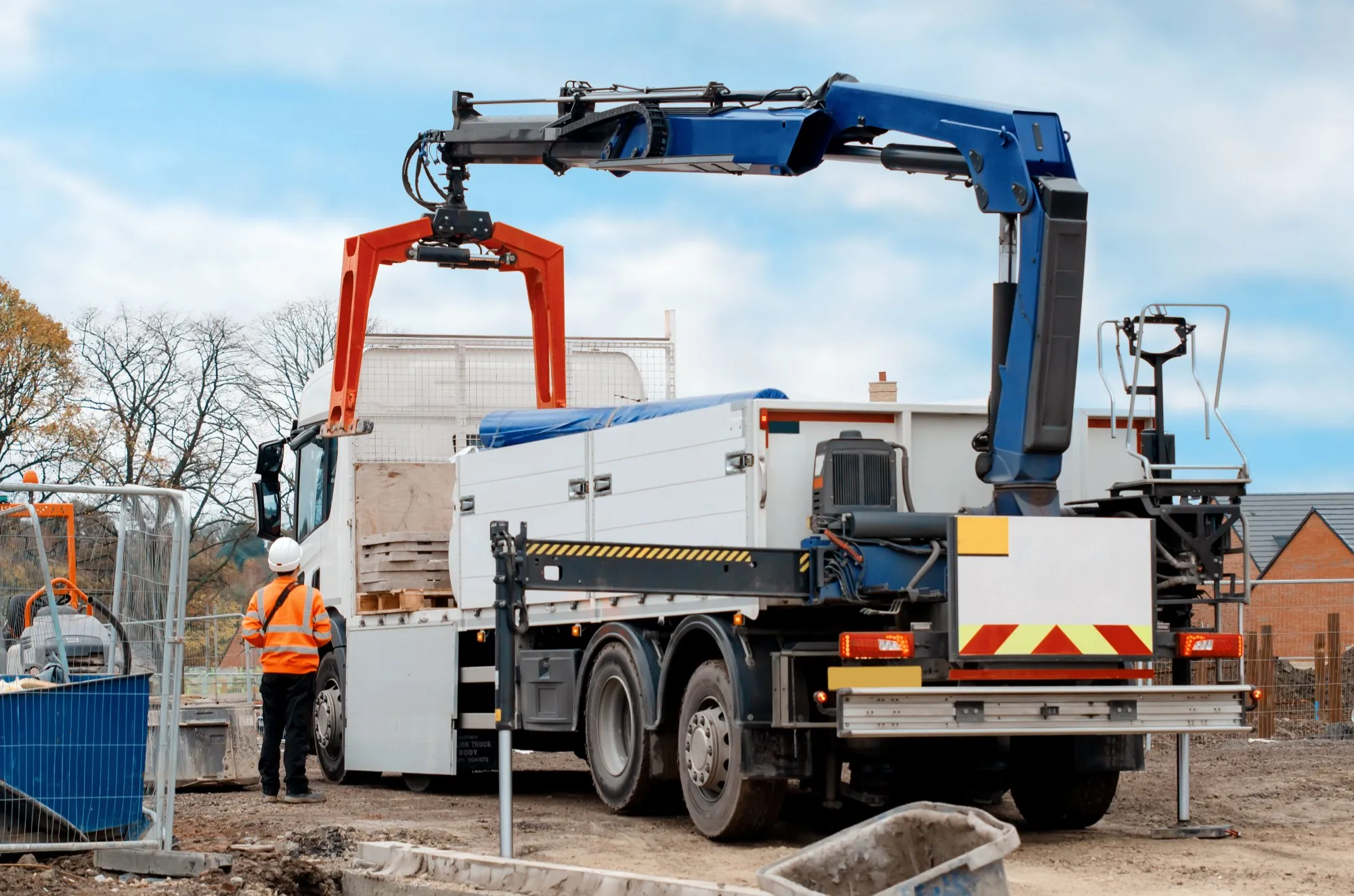
Lorry loaders — commonly known by the brand name HIAB, though this is just one of several manufacturers — are truck-mounted cranes used extensively across UK construction for loading, unloading, and placing materials. Their convenience and availability make them one of the most frequently used pieces of lifting equipment on construction sites, yet lorry loader lift plans are among the most commonly deficient documents submitted for review.
Got a HIAB delivery on the programme this week? We write lorry loader lift plans — stabiliser configuration, load chart verification and positioning worked through properly — from £200 + VAT in 24–48 hours. Or take our free lorry loader lift plan template and fill it in yourself.
When Does a Lorry Loader Need a Lift Plan?
Under LOLER 1998, every lifting operation must be properly planned by a competent person. For lorry loaders, this means a lift plan is required whenever the crane is used to lift and move loads. This includes the most routine delivery operations that many contractors assume are too simple to plan.
Operations that require a lorry loader lift plan include:
- Unloading materials from the delivery vehicle — steel, timber, precast units, plant, and equipment
- Loading materials or waste onto the vehicle for removal
- Placing materials at specific locations on site rather than simply offloading to the ground
- Lifting and positioning modular or prefabricated units
- Any operation where a load is suspended from the lorry loader crane
A common misconception is that routine deliveries do not need lift plans because the lorry loader operator handles the lifting. This is incorrect. LOLER does not distinguish between routine and complex lifts — all lifting operations must be planned. The level of detail in the plan should be proportionate to the risk, but the requirement for planning exists regardless of how straightforward the lift appears.
Lorry Loader Configuration and Capacity
Understanding lorry loader configurations is essential for accurate lift planning. Unlike mobile cranes or telehandlers, lorry loaders have characteristics that are unique to truck-mounted equipment.
Crane Position on the Vehicle
Lorry loaders are typically mounted in one of two positions:
- Behind-cab mounting: The most common arrangement, where the crane is mounted between the cab and the load bed. This provides the best stability for most operations but limits the crane’s reach to the rear of the vehicle
- Rear mounting: The crane is fitted at the rear of the chassis. This is common on vehicles used for specific applications such as skip loading or placing operations where access from the rear is preferred
The crane position affects the stability characteristics and load chart of the machine. A behind-cab mounted crane lifting over the rear of the vehicle behaves differently from one lifting over the side, and the lift plan must account for the actual direction of lift.
Boom Type
Modern lorry loaders use hydraulic knuckle boom cranes with multiple extensions. The crane’s capacity reduces with each extension section deployed, and the load chart must be read correctly for the actual boom configuration being used. Some lorry loaders are also fitted with fly jibs or manual extensions that further increase reach at reduced capacity — these must be specifically identified in the lift plan.
Stabiliser Systems
Lorry loader stabilisers come in several configurations, each with different effects on lifting capacity:
- Full extension stabilisers: Legs extend to the sides of the vehicle, providing maximum stability. Most load charts show maximum capacity with stabilisers fully extended
- Intermediate positions: Some stabiliser systems allow partial deployment. The load chart may show different capacities for different extension positions, but partial deployment always reduces capacity compared to full extension
- No stabilisers (on tyres): Some lighter lorry loaders can operate without stabilisers for reduced loads. This dramatically reduces capacity and is only safe within the specific parameters shown on the relevant load chart
The lift plan must specify the stabiliser configuration to be used and confirm that the load chart capacity is based on that specific configuration. Using the wrong stabiliser setting is a common cause of lorry loader incidents.
What Should a Lorry Loader Lift Plan Include?
A LOLER-compliant lorry loader lift plan must be proportionate to the risk involved, but should always address the following elements. If you want a head start, our free lorry loader lift plan template sets out all 17 sections — aligned with BS 7121-4 and the ALLMI Code of Practice — with a pre-populated risk register you can adapt to your own operation.
Vehicle Positioning
Where the lorry parks on site is one of the most critical elements of a lorry loader lift plan, and is often the area given least attention. The plan must consider:
- Ground conditions: The vehicle and stabiliser pads will impose significant loads on the ground. The plan must assess whether the ground can support these loads without subsidence. On made-up ground, near excavations, or over underground services, this assessment is critical
- Level ground: Lorry loaders should ideally operate on level ground. Where this is not possible, the gradient must be within the manufacturer’s permitted limits
- Stabiliser footprint: Adequate space must be available for full stabiliser deployment. On narrow roads, adjacent to kerbs, or in confined site areas, full extension may not be possible — in which case, the reduced capacity must be used in the plan
- Access and egress: The vehicle must be able to reach the offloading position and leave safely, including consideration of overhead obstructions and turning circles
- Proximity to live traffic: Many lorry loader operations take place on or adjacent to public roads. Traffic management requirements must be addressed in the plan
Load Information
Accurate load data is essential. The plan must record:
- The weight of each item to be lifted, obtained from delivery documentation, manufacturer’s data, or by calculation
- The dimensions and centre of gravity of the load
- The weight of all lifting accessories — slings, chains, shackles, spreader beams — which must be added to the load weight
- Whether multiple items are to be lifted simultaneously and the combined weight
Radius and Capacity Check
The lift plan must demonstrate that the lorry loader has adequate capacity at the working radius for each phase of the lift. For lorry loaders, the critical point is often the maximum radius — the furthest point the load must reach during the operation.
Lorry loader capacity reduces dramatically with radius. A machine rated at 10 tonne-metres might lift 2,500kg at 4 metres radius but only 1,000kg at 10 metres. The plan must check capacity at the actual maximum radius required, not at minimum radius.
Reading that figure off the correct duty chart is where most of the planning time goes and where most of the errors are made. Our HIAB and lorry loader lift plan software holds published duty charts for more than 1,900 loader cranes, so selecting the machine brings its rated capacity table with it and the radius check is made against the manufacturer’s own published figures rather than a remembered one.
Where multiple items are being offloaded to different positions, the plan should check capacity for the most onerous lift — typically the heaviest item at the greatest radius.
Ground Bearing Pressure
Lorry loader stabilisers can impose very high point loads on the ground. A fully loaded lorry with the crane lifting at extended radius can place several tonnes through each stabiliser pad. The lift plan must:
- Calculate the maximum stabiliser reaction forces based on the manufacturer’s data
- Assess the ground bearing capacity at the planned operating position
- Specify load-spreading measures where necessary — typically timber mats or steel plates under the stabiliser pads
- Consider the effect of recent weather on ground conditions, particularly on unpaved surfaces
Hazard Assessment
Site-specific hazards must be identified and addressed. Common hazards for lorry loader operations include:
- Overhead power lines: Lorry loader booms can reach considerable heights. Any overhead power lines within the working area or along the access route must be identified, with minimum approach distances calculated
- Underground services: Stabiliser pad loads can damage shallow underground services. Service plans should be reviewed and trial holes considered where records are uncertain
- Pedestrians and other workers: Exclusion zones must be established beneath and around the lift. On public roads, pedestrian management may be required
- Other vehicles: On active construction sites or public roads, other vehicle movements must be managed during the lifting operation
- Wind: Wind limits should be specified, particularly for loads with large surface areas
Lorry Loader Operations on Public Roads
Many lorry loader operations — particularly material deliveries — take place on or immediately adjacent to public highways. These operations introduce additional planning requirements.
Traffic management must be arranged in accordance with Chapter 8 of the Traffic Signs Manual where the operation affects the public highway. This may require advance signing, temporary traffic signals, or a road closure depending on the nature and duration of the work. The lift plan should reference the traffic management plan and confirm that appropriate measures are in place before the lifting operation begins.
Vehicle positioning on public roads is constrained by road width, adjacent properties, and the need to maintain traffic flow where possible. The lift plan must work within these constraints, which may mean accepting reduced stabiliser extension and therefore reduced lifting capacity.
Common Mistakes in Lorry Loader Lift Plans
From years of reviewing lorry loader lift plans submitted by subcontractors, these are the mistakes that appear most frequently. If a plan has already been written and you want it caught before the principal contractor catches it, our lift plan checking service exists for precisely this.
No Plan at All
The most common problem is the complete absence of a lift plan. Many contractors treat lorry loader deliveries as routine operations that do not require planning. This is a direct breach of LOLER and leaves both the contractor and the principal contractor exposed to enforcement action.
Generic Plans Not Specific to the Site
Some operators carry a single generic lift plan that they use for every delivery regardless of the site. A lift plan must be specific to the actual operation — the site conditions, the loads being lifted, the vehicle position, and the hazards present. A plan that does not address the specific circumstances of the lift is not compliant with LOLER.
Using the Wrong Load Chart Configuration
Load charts for lorry loaders show different capacities for different stabiliser configurations and boom arrangements. Using the fully-extended stabiliser chart when the vehicle will be operating with stabilisers partially deployed — as is common on narrow roads — can result in the machine being overloaded.
Ignoring Vehicle Load Condition
The stability of a lorry loader changes as materials are offloaded from the vehicle. A fully loaded vehicle is more stable than an empty one when lifting from the opposite side to the crane. The lift plan should consider the vehicle’s load condition at each stage of the offloading sequence, particularly for the final lifts when the vehicle is lightest.
No Ground Assessment
Failing to assess ground conditions beneath stabiliser pads is a frequent and potentially serious oversight. This is particularly dangerous on construction sites where ground has been recently excavated and backfilled, or where underground services or basements exist beneath the operating area.
Operator Competence
Lorry loader operators must hold appropriate competence certification. Under CPCS, the relevant category is:
- A36 — Lorry Loader: The standard category for operating lorry-mounted cranes
In addition to CPCS certification, operators should be familiar with the specific machine they are operating, including its load chart, stabiliser system, and any fitted safety systems such as rated capacity indicators (RCIs) or load moment indicators (LMIs). Many modern lorry loaders are fitted with sophisticated electronic management systems that limit operation within the safe working envelope — operators must understand how these systems function and must never override or disable them.
Thorough Examination and Inspection
Lorry loaders used for lifting must undergo thorough examination under LOLER Regulation 9:
- The crane: Must be thoroughly examined at least every 12 months
- Lifting accessories: All slings, chains, shackles, and other accessories used in conjunction with the lorry loader must be examined at least every 6 months
- After installation or reassembly: Following any significant repair or modification to the crane
In addition to thorough examination, the operator should conduct a pre-use check before each shift, inspecting the crane, stabilisers, hydraulic hoses, and controls for visible defects or damage. The lift plan should require confirmation that the pre-use check has been completed satisfactorily.
Planning Multi-Drop Deliveries
Many lorry loader operations involve multiple deliveries to different locations on the same site, or to multiple sites in a single day. Each offloading position is effectively a separate lifting operation and should be assessed individually.
Where a lorry loader will operate at multiple positions on the same site, the lift plan can cover all positions provided each one is assessed for ground conditions, overhead hazards, vehicle positioning, and capacity at the required radius. A plan that only assesses one position and assumes all others are the same is inadequate.
For regular repeat deliveries to the same site — such as ongoing steel or concrete deliveries during a construction programme — a standing lift plan can be prepared covering the standard offloading positions. This should be reviewed if site conditions change, and each delivery should still be confirmed against the plan before lifting commences.
How RMT Solutions Can Help
Lorry loader operations may be routine, but the planning requirements are not optional. Every delivery involving a lorry loader crane is a lifting operation under LOLER, and every one needs a plan. The consequences of getting it wrong range from HSE enforcement notices and fines to serious injuries and fatalities.
RMT Solutions provides LOLER-compliant lorry loader lift plans prepared by a CPCS Appointed Person with 35 years of construction industry experience. Whether you need a one-off plan for a complex delivery or a standing plan for regular site deliveries, we ensure your operations are properly planned and compliant.
Need a Lorry Loader Lift Plan?
RMT Solutions provides LOLER-compliant lorry loader lift plans for all types of truck-mounted crane operations. Fast turnaround from a CPCS Appointed Person with 35 years of experience. Prefer to draft your own? Start from our free lorry loader lift plan template, or produce the whole pack yourself in our HIAB and lorry loader lift plan software — free to try for 14 days.
Get a QuoteRicky Marsh
CPCS A61 Appointed Person | NEBOSH National Diploma | CertIOSH | MIIRSM | TIFSM
With 35 years of construction industry experience, Ricky provides expert lift planning and compliance services to contractors across the UK. Specializing in LOLER compliant lift plans, tower crane contracts, and steel erection planning.
Need a lift plan written? Plans from £200, 24-48h turnaround
07803 8080933 fields, 30 seconds. We reply within 4 working hours.