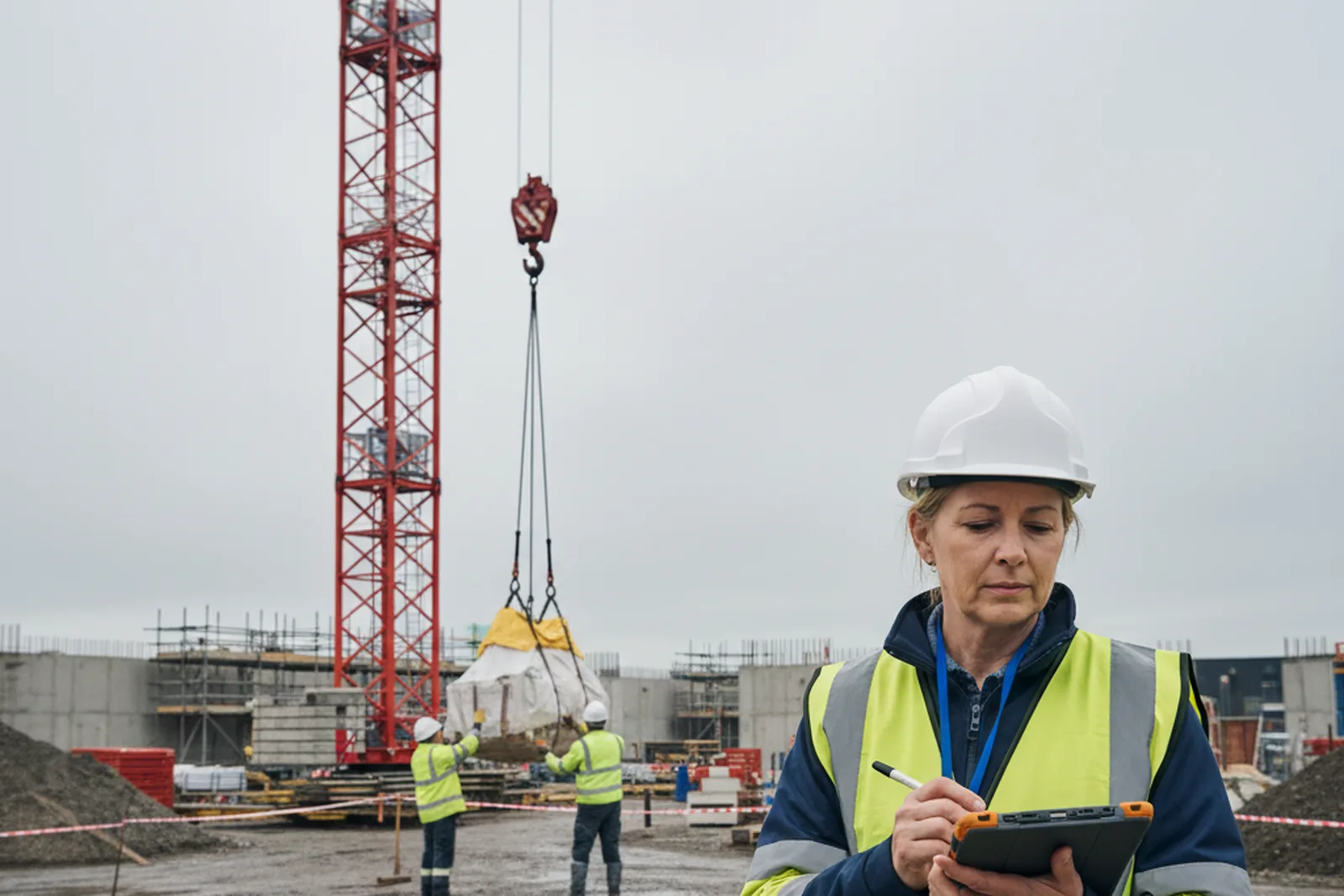
What Does a Lift Plan Checking Service Involve?
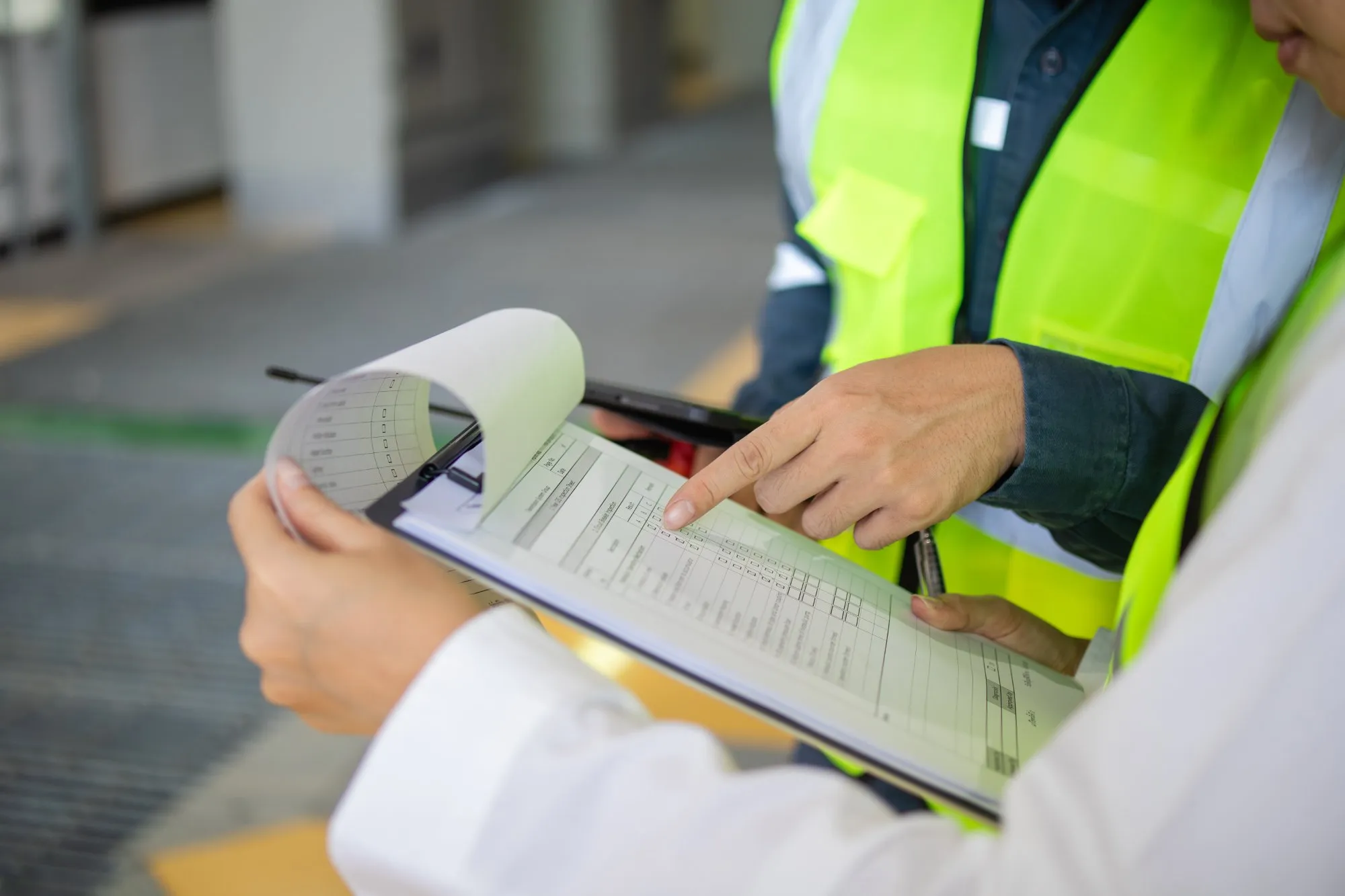
If you manage lifting operations on construction projects — particularly as a principal contractor or tier 1 main contractor — you will know that subcontractors are required to submit lift plans before carrying out any lifting work on your site. But how do you know whether those plans are actually any good? A lift plan checking service provides independent, competent review of submitted lift plans to ensure they are LOLER compliant, technically accurate, and safe to proceed.
Why Do Contractors Need a Lift Plan Checking Service?
Under LOLER 1998, the duty to ensure lifting operations are properly planned does not sit solely with the subcontractor performing the lift. As a principal contractor or main contractor under CDM 2015, you have a duty to ensure that lifting operations on your site are planned and carried out safely. If a subcontractor submits a deficient lift plan and you allow the lift to proceed, the responsibility is shared.
The problem is that many site teams do not have the technical expertise to properly evaluate a lift plan. A site manager or project manager may be highly competent in their own discipline, but assessing whether a crane has adequate capacity at a given radius, whether the ground can support the outrigger loads, or whether the rigging arrangement is suitable for the load requires specialist knowledge.
This is where a lift plan checking service comes in. By having an experienced Appointed Person independently review every lift plan submitted to your project, you ensure that deficient plans are identified and corrected before the lift takes place — not after something goes wrong.
What Gets Checked in a Lift Plan Review?
A thorough lift plan review examines every element of the submitted plan against the requirements of LOLER, relevant British Standards (particularly BS 7121 for crane operations), and industry best practice. The review is not a tick-box exercise — it is a technical assessment by a competent person who understands lifting operations from the ground up.
Load Weight Verification
The first and most fundamental check is whether the stated load weight is accurate. This includes verifying that the weight has been obtained from a reliable source — manufacturer's data, structural drawings, delivery documentation, or calculation — and that the weight of all lifting accessories (slings, shackles, spreader beams, lifting frames) has been included in the total suspended load.
Inaccurate load weights are the single most common deficiency found during lift plan reviews. Estimated weights, weights taken from outdated information, or weights that omit the rigging are all regularly encountered. Even a small understatement of load weight can push a lift into an unsafe utilisation range.
Equipment Selection and Capacity
The review verifies that the selected lifting equipment — whether it is a mobile crane, excavator, telehandler, or lorry loader — has adequate capacity for the planned lift. This involves checking the manufacturer's load chart for the specific machine configuration against the planned working radius and confirming that the resulting utilisation is within acceptable limits.
Common errors identified at this stage include using the wrong load chart for the machine configuration (for example, quoting capacity with a shorter boom than is actually fitted), calculating the radius incorrectly, or failing to account for factors that reduce capacity such as working on a slope or with partially deployed outriggers.
Rigging Assessment
The review checks that the proposed rigging arrangement is appropriate for the load. This includes verifying that sling types, sizes, and configurations are suitable, that sling angles are within acceptable limits, that the working load limit of each component in the rigging chain is adequate, and that the attachment points on the load are suitable for the forces involved.
Rigging errors are particularly dangerous because they can cause the load to become unstable, shift, or detach during the lift. The review looks for common problems such as excessive sling angles (which dramatically increase the forces in each leg), mismatched sling lengths, inadequate attachment points, and failure to account for the load's centre of gravity.
Ground Conditions
For any lifting operation involving outriggers, stabilisers, or tracked equipment, the ground on which the machine operates must be assessed. The review checks that the lift plan has considered ground bearing capacity, proximity to excavations or soft ground, underground services, and the requirement for load-spreading measures beneath outrigger pads.
Ground failure beneath a crane or lifting machine can have catastrophic consequences. The review ensures that this critical element has been properly addressed, not simply assumed.
Site-Specific Hazards
Every lifting operation takes place in a specific environment with specific hazards. The review checks that the plan has identified and addressed hazards including overhead power lines, underground services, adjacent structures and scaffolding, other plant and vehicle movements, pedestrian routes, and weather conditions.
A common deficiency is the submission of generic lift plans that make no reference to the actual site conditions. A plan that does not mention the overhead power line running across the crane's operating area, or the open excavation adjacent to the outrigger position, is not a compliant plan regardless of how accurately the capacity calculations have been completed.
Personnel and Competence
The review checks that the plan identifies the key personnel involved in the lifting operation and confirms their competence. This includes verifying that operators hold appropriate CPCS or equivalent certification for the equipment they will be operating, and that slinger/signallers are properly trained and qualified.
Thorough Examination Status
Under LOLER Regulation 9, all lifting equipment and lifting accessories must have current thorough examination certificates. The review checks that the plan confirms this requirement has been met, or flags where certificates need to be verified before the lift can proceed.
What Happens When a Plan Fails the Review?
When a lift plan review identifies deficiencies, the plan is returned to the submitting contractor with clear feedback on what needs to be corrected. This is not about rejecting plans for the sake of it — it is about ensuring that every lift on your project is properly planned and safe to proceed.
Common reasons for lift plans being returned include:
- Inaccurate or unverified load weights — the most frequent issue, where load weights are estimated rather than confirmed from reliable sources
- Incorrect capacity calculations — wrong load chart, wrong radius, or failing to deduct rigging weight from available capacity
- Missing ground assessment — no consideration of ground bearing capacity beneath outriggers or stabilisers
- No site-specific hazard identification — generic plans that do not address the actual conditions at the specific location
- Inadequate rigging details — vague or incorrect information about sling types, sizes, and configurations
- Missing or expired thorough examination certificates — equipment being proposed for use without current certification
- Incomplete information — plans that leave critical fields blank or contain insufficient detail for the operation to be carried out safely
In most cases, the issues can be resolved by the submitting contractor amending and resubmitting the plan. The goal is to get the plan right, not to create obstacles. An experienced lift plan checker will provide constructive feedback that helps subcontractors understand what is required and improve the quality of their future submissions.
How Does the Service Work in Practice?
For most tier 1 contractors, a lift plan checking service operates as an ongoing arrangement throughout the duration of a project or across multiple projects. The typical workflow is straightforward:
Subcontractors submit their lift plans to the site team as normal. The site team forwards them to the Appointed Person providing the checking service — usually by email. The Appointed Person reviews the plan, typically within 24 hours for standard submissions, and returns it either approved or with comments identifying what needs to be corrected.
For projects with high volumes of lifting operations — such as large-scale structural steel erection or precast concrete programmes — the checking service may review dozens of plans per week. The turnaround time and communication process should be agreed at the start of the arrangement to avoid delays to the construction programme.
The service can operate entirely remotely. For the majority of lifting operations — excavators, telehandlers, lorry loaders, and standard crane lifts — the Appointed Person does not need to visit site to review the plan. The plan document, together with any supporting information such as site drawings and ground investigation reports, provides the information needed for a thorough review.
The Benefits for Tier 1 Contractors
A lift plan checking service provides several tangible benefits for main contractors and principal contractors.
LOLER Compliance
The most obvious benefit is compliance with your legal duties under LOLER. By having every submitted lift plan reviewed by a competent Appointed Person, you can demonstrate that you have taken reasonable steps to ensure lifting operations on your site are properly planned. This is critical in the event of an incident or HSE inspection.
Reduced Risk
Deficient lift plans that are identified and corrected before the lift takes place eliminate risks that would otherwise have been present during the operation. Over the course of a major project, a checking service may identify dozens of issues — any one of which could have led to an incident if the lift had proceeded as originally planned.
Improved Subcontractor Standards
Regular feedback from the checking service helps subcontractors improve the quality of their lift plans over time. Contractors who initially submit deficient plans often improve significantly once they understand what is expected. This creates a positive cycle where the standard of submissions improves as the project progresses.
Consistent Standards Across the Project
When multiple subcontractors are submitting lift plans to the same project, having a single Appointed Person reviewing all submissions ensures consistent standards are applied. Without this, the standard of lift planning can vary dramatically between different subcontractors, with some producing excellent plans and others producing plans that are barely adequate.
Specialist Knowledge Without the Overhead
Employing a full-time Appointed Person is not practical for most individual projects. A lift plan checking service gives you access to specialist lifting expertise on a flexible basis — you pay for the service when you need it, without the overhead of a permanent appointment.
What Makes a Good Lift Plan Checking Service?
Not all lift plan checking services are equal. The quality of the review depends entirely on the competence and experience of the person carrying it out. When selecting a provider, look for:
- CPCS Appointed Person (A61) qualification — the recognised industry standard for lift planning competence
- Broad operational experience — ideally covering the full range of lifting equipment, not just mobile cranes. Many projects involve a mix of cranes, excavators, telehandlers, and lorry loaders, and the checking service must be competent across all types
- Construction industry background — understanding of how construction sites actually work, the pressures on subcontractors, and the practical realities of lifting operations in a site environment
- Clear and constructive feedback — the service should help subcontractors improve, not simply reject plans without explanation
- Reasonable turnaround times — lift plan reviews should not become a bottleneck in the construction programme
Common Questions About Lift Plan Checking
Does every lift on site need a reviewed plan?
Under LOLER, every lifting operation must be planned. Whether every plan needs independent review depends on the risk profile of the project and your organisation's procedures. Many tier 1 contractors require all lift plans to be reviewed by an Appointed Person before any lifting work proceeds. Others may allow certain low-risk, routine operations to be managed under standing procedures with periodic audit. The safest approach is to review everything.
Can the lift plan checker also write lift plans?
Yes. An Appointed Person providing a checking service can also write lift plans where required — for example, for complex operations where the subcontractor does not have the competence to plan the lift themselves. However, it is good practice to maintain a separation between writing and checking where possible, so that plans receive genuinely independent review.
What qualifications should the checker have?
The checker must be a competent person under LOLER. For crane and construction lifting operations, this means a CPCS Appointed Person (A61) as a minimum. Additional qualifications such as NEBOSH or IOSH membership demonstrate broader health and safety competence. Practical experience across different equipment types and site conditions is equally important.
How quickly can plans be reviewed?
Standard turnaround is typically 24 hours for routine submissions. For urgent requirements — such as unplanned lifts or programme-critical operations — same-day review can usually be arranged. The key is establishing clear communication channels and expectations at the outset.
How RMT Solutions Can Help
RMT Solutions provides lift plan checking services to tier 1 contractors across the UK. With 35 years of construction industry experience and CPCS Appointed Person (A61) qualification, we review lift plans for all equipment types — mobile cranes, tower cranes, excavators, telehandlers, and lorry loaders.
Our service is trusted by leading UK contractors including Wates, Caddick, and GMI Construction. We provide fast turnaround, clear and constructive feedback, and consistent standards across your projects.
Whether you need a checking service for a single project or an ongoing arrangement across your portfolio, we can tailor the service to your requirements.
Need a Lift Plan Checking Service?
RMT Solutions provides professional lift plan checking for tier 1 contractors across the UK. Trusted by Wates, Caddick, and GMI Construction. Fast turnaround from a CPCS Appointed Person with 35 years of experience.
Get a QuoteAbout the Author: Ricky Marsh is a CPCS Appointed Person (A61) with 35 years of construction industry experience. He holds NEBOSH National Diploma, CertIOSH, MIIRSM and TIFSM qualifications, and provides lift plan checking services to tier 1 contractors across the UK through RMT Solutions.
Ricky Marsh
CPCS Appointed Person (A61, Reg: 40389279) | NEBOSH National Diploma | CertIOSH | MIIRSM | TIFSM
With 35 years of construction industry experience, Ricky provides expert lift planning and compliance services to contractors across the UK. Specializing in LOLER compliant lift plans, tower crane contracts, and steel erection planning.
Need a lift plan written? Plans from £200, 24-48h turnaround
07803 8080933 fields, 30 seconds. We reply within 24 hours.