CDM 2015 & Lifting: Principal Contractor Duties
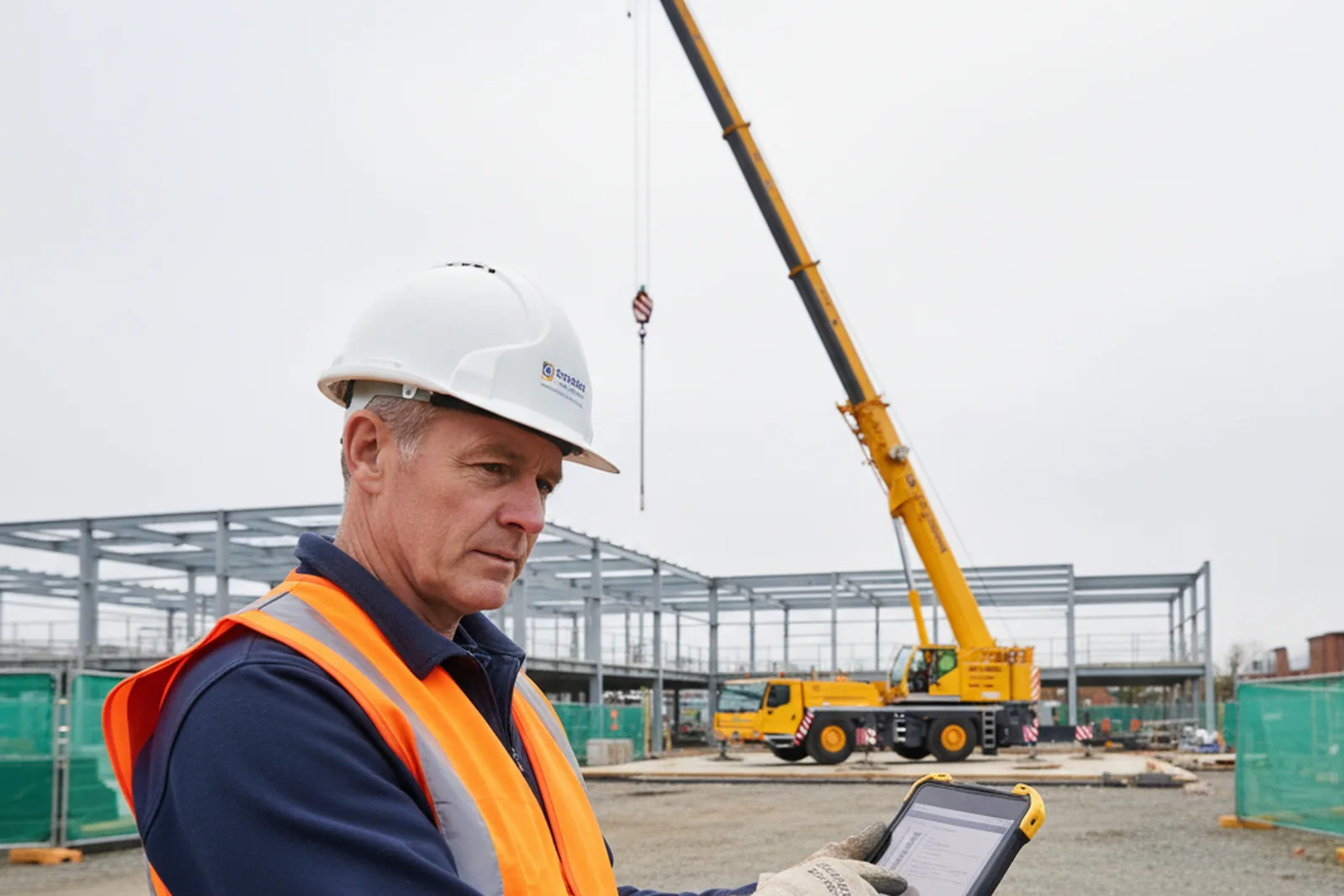
Most lifting law conversations start and end with LOLER. But for a principal contractor there is a second duty running in parallel: CDM 2015 Regulation 13 requires the PC to plan, manage and monitor the construction phase — and lifting operations are among the highest-risk activities in it. When a subcontractor's telehandler drops a load, "their lift, their plan" is not a defence the PC gets to use. This guide sets out what CDM actually asks of the PC on lifting, and the evidence trail that satisfies it.
Two Regimes, One Site
LOLER puts the planning duty on whoever carries out the lifting operation — normally discharged through an Appointed Person and a lift plan. CDM 2015 puts a coordination and monitoring duty on the principal contractor for everything happening on their site, including work they have subcontracted. The subcontractor owns their lift; the PC owns the site on which it happens, the interfaces around it, and the checking that it was competently planned.
What the PC Must Actually Do
- Address lifting in the construction phase plan — how lifting operations will be managed, who reviews lift plans, crane coordination arrangements, and exclusion zone principles. A CPP that never mentions cranes on a crane-heavy site is a gap an inspector will find.
- Set the site rules — submission timescales for lift plans (48 hours before the lift, not at the gate), utilisation limits, permit-to-lift arrangements, and the standard subcontractor documents must meet.
- Review subcontractor lift plans competently — someone with lifting competence must check what is submitted. This is exactly the role of an independent lift plan checking service, and the recurring failures are catalogued in why lift plans get rejected.
- Coordinate concurrent operations — overlapping crane slew zones, deliveries under tower cranes, MEWPs inside exclusion zones. Individual lift plans do not see each other; the PC's coordination does.
- Monitor what actually happens — spot checks that lifts follow the approved plan, and periodic lifting operation audits to test the whole arrangement. Paper compliance with chaotic execution fails Regulation 13.
The Evidence Trail
When the HSE investigates a lifting incident on a multi-contractor site, the PC's file is opened alongside the subcontractor's. What stands up: a CPP section on lifting management; a register of lift plans received, reviewed and approved with named reviewers; recorded comments and re-submissions; permit-to-lift records; audit reports and closed-out actions. What does not: a folder of unread RAMS and an assumption the crane company handled it — the enforcement angle covered in what HSE inspectors look for.
Buying In the Competence
Few PCs carry a full-time lifting specialist per project. The practical model most tier 1 contractors run is an independent reviewer: subcontractor plans go to a CPCS A61 Appointed Person for review and comment, complex lifts get planned directly, and the site gets a periodic audit. That is precisely the service we provide to principal contractors including Caddick Construction — from £200 per plan review, with same-day turnaround where the programme demands it.
Running a Multi-Contractor Site?
We review subcontractor lift plans, write the ones they can't, and audit your lifting arrangements against LOLER, BS 7121 and your CPP — the CDM evidence trail, done properly.
Get in Touch TodayFrequently asked questions
Who is responsible for lifting operations on a construction site?
Both duties run at once. Under LOLER, the contractor carrying out the lift must have it planned by a competent person — normally an Appointed Person producing a lift plan. Under CDM 2015 Regulation 13, the principal contractor must plan, manage and monitor the construction phase, which includes coordinating and checking lifting operations carried out by subcontractors.
Does the principal contractor have to check subcontractor lift plans?
In practice, yes. CDM 2015 requires the PC to manage and monitor high-risk work on their site, and accepting lifting documentation unreviewed does not discharge that duty. The review must be done by someone with lifting competence — many principal contractors use an independent Appointed Person as their lift plan reviewer.
Should the construction phase plan cover lifting operations?
Yes, on any site with meaningful lifting. The construction phase plan should set out how lifting will be managed: who reviews and approves lift plans, submission timescales, crane coordination arrangements, permit-to-lift systems and exclusion zone principles. A CPP that ignores lifting on a crane-heavy site is a standard enforcement finding.
What lifting records should a principal contractor keep?
A register of lift plans received, reviewed and approved with named reviewers and dates; recorded comments and re-submissions; permit-to-lift records; thorough examination certificates checked for machines and accessories; briefing records; and periodic lifting operation audit reports with closed-out actions. This is the evidence trail examined after any incident.
Ricky Marsh
CPCS A61 Appointed Person | NEBOSH National Diploma | CertIOSH | MIIRSM | TIFSM
With 35 years of construction industry experience, Ricky provides expert lift planning and compliance services to contractors across the UK. Specializing in LOLER compliant lift plans, tower crane contracts, and steel erection planning.
Need a lift plan written? Plans from £200, 24-48h turnaround
07803 8080933 fields, 30 seconds. We reply within 4 working hours.