CPCS Appointed Person A61 · LOLER 1998 · BS 7121-7
Overhead & Gantry Crane Lift Plans, UK
Quote-on-application lift plans for overhead travelling, gantry, bridge and jib cranes, prepared by a CPCS Appointed Person with 35+ years of experience. LOLER 1998 and BS 7121-7 compliant plans for factories, warehouses and fabrication yards — trusted by UK manufacturers and Tier 1 contractors.
Why overhead and gantry crane lifting needs proper planning
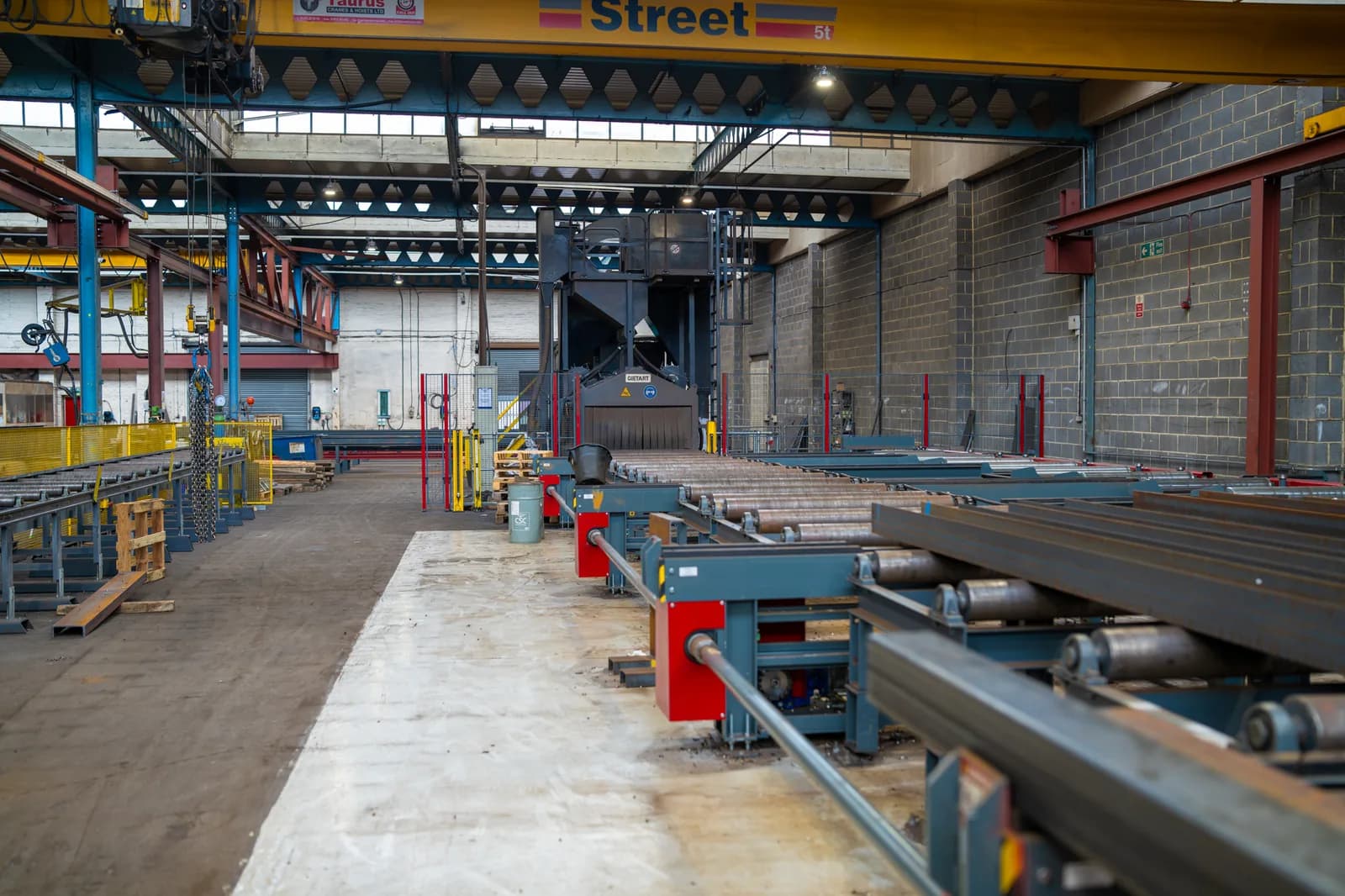
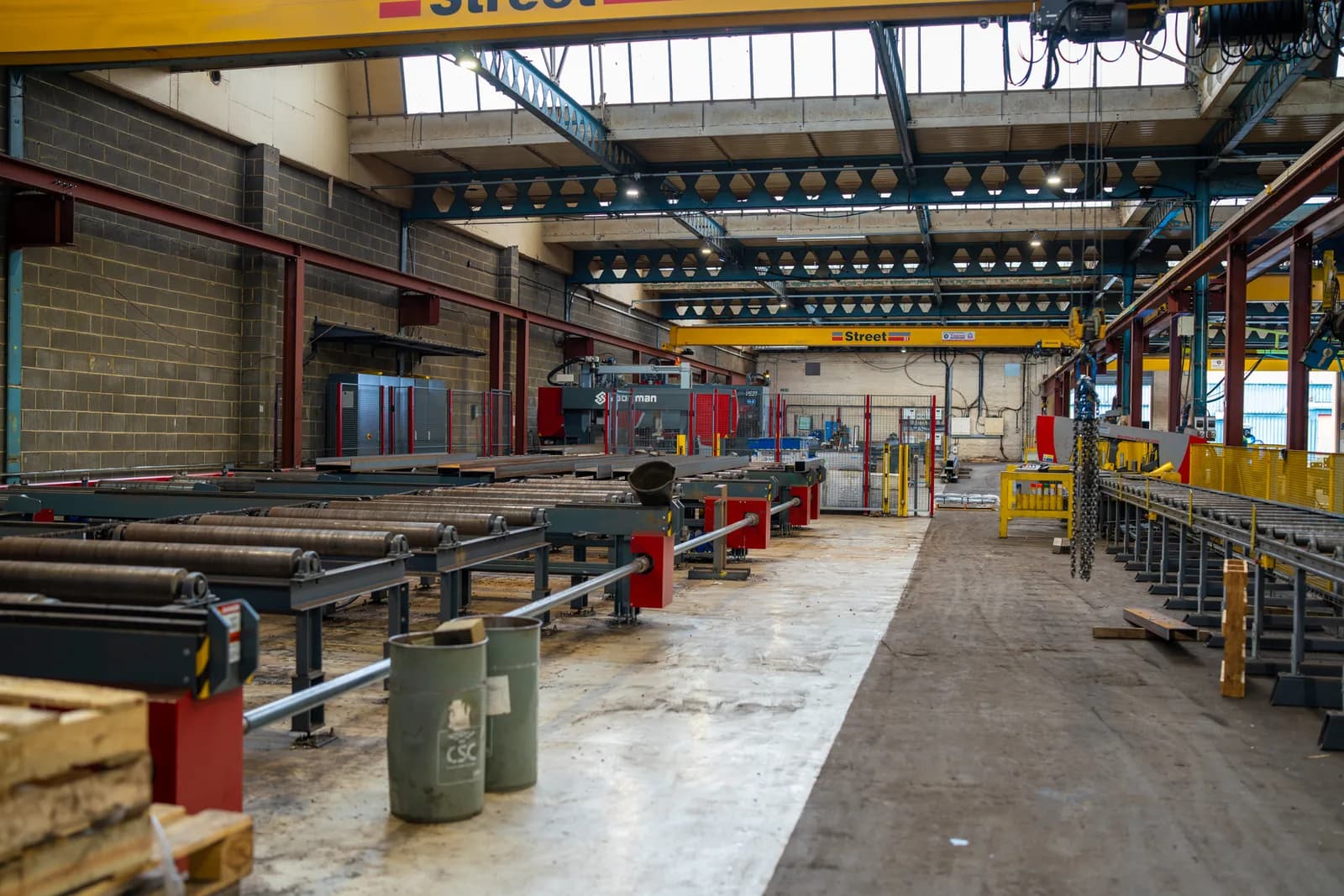
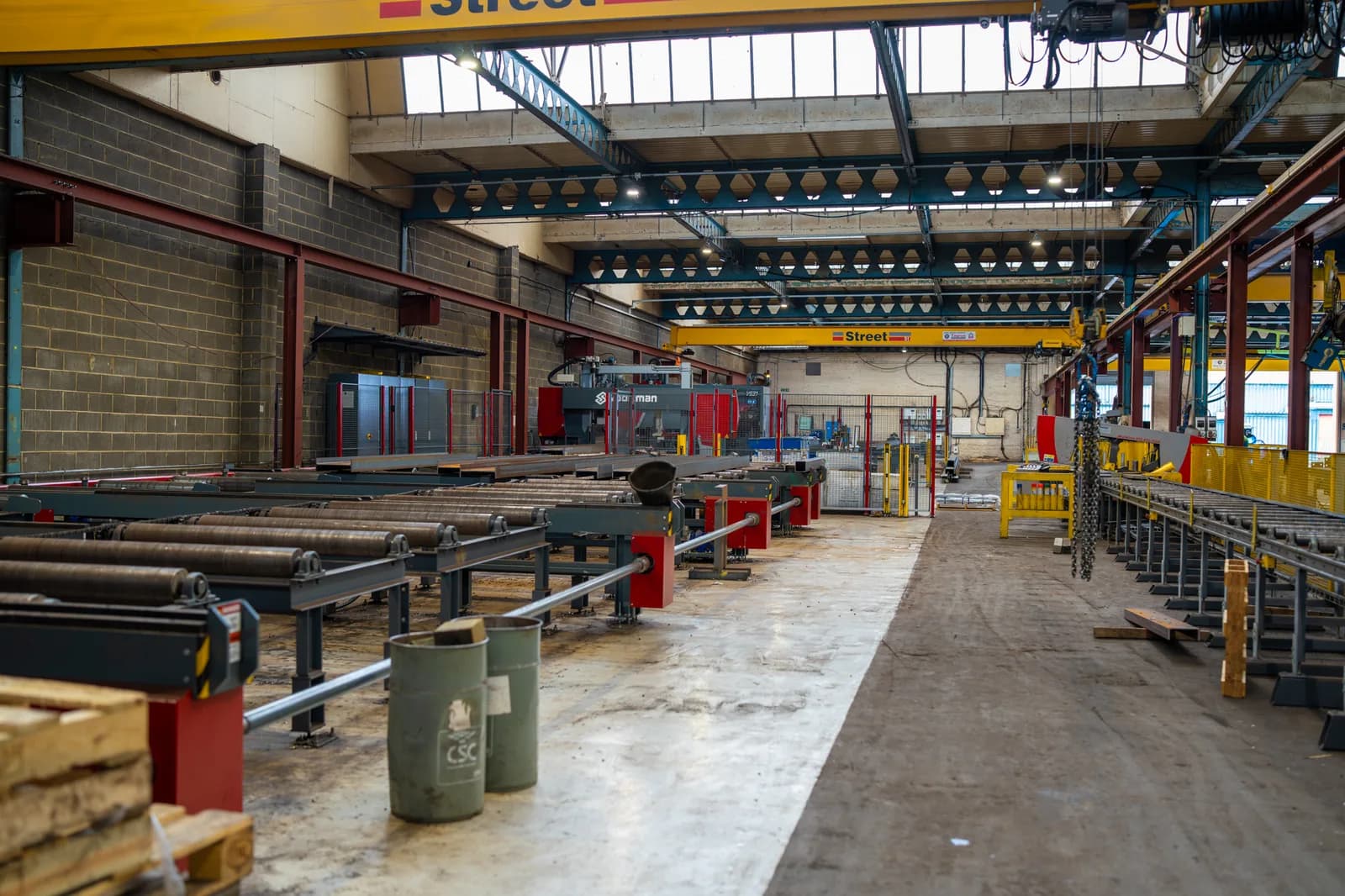
Overhead travelling cranes, gantries and bridge cranes are the backbone of lifting in UK factories, warehouses, fabrication shops, steel stockholders and engineering workshops. Because they are fixed plant that staff use every day, it's easy to treat them as "just part of the building" — and that's exactly where the risk creeps in. A fixed overhead crane is still lifting equipment under LOLER 1998, and the lifting operations carried out with it must be planned by a competent person.
The hazards are different from a mobile crane on a construction site, but they are no less serious. BS 7121-7 (safe use of overhead travelling cranes) and BS 7121-1 set out how these operations should be planned and supervised. The recurring problems the HSE sees with factory crane incidents include:
Loads carried over people
Production areas are busy and occupied — routing a suspended load over walkways, machinery or workstations is a leading cause of factory crane injuries.
Pendant and radio control habits
Operators walk with the load on a pendant or radio remote; complacency, poor sightlines and walking backwards create crush and trip hazards.
Load swing and snatch loading
Side-pulling, dragging loads and sudden starts/stops induce swing and shock loading the crane was never rated for.
Two-block and over-hoist
Running the hook block into the crab or end stops can overload the rope and hoist if limit switches are defeated or faulty.
Tandem (twin-crane) lifts
Lifting one load on two cranes shares and shifts load unpredictably and demands synchronised, de-rated, supervised operation.
Runway and structure loading
Overhead cranes load the building structure or their own gantry legs; wheel loads, end-stop forces and maintenance lifts all need checking.
A proper overhead crane lift plan deals with each of these in writing — load weight and centre of gravity, SWL verification, lifting accessories, travel route and exclusion zones, slinger/signaller arrangements and a method everyone has been briefed on. To work the load on each sling leg and check the accessories against their WLL, there is software for that part. For background on how a plan is built and when one is required, see do you need a lift plan for an overhead crane and the broader what is a lift plan article.
What's included in your overhead crane lift plan
Every lift plan we issue is a complete pack — risk assessment, method statement, calculations and arrangement drawing in one place. It is briefed to your team, signed off by an Appointed Person and ready to drop into your safety file or CDM documentation.
Crane & environment assessment
- Crane type, span, SWL and configuration confirmed from the data plate
- Travel route, walkways and occupied-area review (loads over people)
- Runway, gantry-leg or structural loading considerations
- Headroom, hook approach and adjacent-obstruction check
- Exclusion-zone determination and barrier strategy
Equipment verification
- Crane SWL and current LOLER thorough examination certificate
- Hoist, rope/chain and limit-switch (over-hoist) condition
- Lifting accessories specification — chains, slings, shackles, beams, WLLs
- Below-the-hook devices (spreader/lifting beams, magnets, vacuum lifters)
- Pre-use check and competent operator/slinger confirmation
Lift calculations
- Load weight including rigging and below-the-hook equipment
- Centre-of-gravity identification and slinging method
- Verification that load stays within crane SWL (and de-rated SWL for tandem lifts)
- Lifting accessory WLL checks against sling angles and lift configuration
- Load-share calculation for twin-crane / tandem operations
Documentation pack
- Lift plan arrangement drawing with travel route and exclusion zones marked
- Risk assessment with site-specific control measures
- Method statement with sequence of operations
- Lifting accessories schedule with WLL evidence
- Pre-lift checklist and toolbox-talk record
- Briefing template ready for your slinger/banksman/operator sign-off
How it works — and how fast
Quote-on-application, no sign-up, no hidden fees. Send the brief and we'll come back to you the same working day.
You send the brief
Crane data plate / SWL, span and type, load details, the lift or travel route, and any constraints. A few photos and a floor-plan sketch usually do it.
We quote
Fixed-fee quote returned within 4 working hours, with a clear scope and a confirmed delivery date.
Plan produced
Arrangement drawing, calculations, RA/MS and accessories schedule prepared by a CPCS Appointed Person. One revision included.
Briefing & sign-off
Plan issued in PDF + editable formats. We support your team through briefing and any reviewer queries.
Urgent or same-day work is accommodated where possible — call 07803 808093 and we'll tell you straight whether it can be done.
Overhead crane types we cover
From a 1-tonne workshop jib to a 50-tonne twin-girder EOT crane in a steel mill — if it's a fixed lifting machine, we'll plan the lift.
Overhead travelling (EOT) cranes
Single- and double-girder bridge cranes running on building-mounted runway beams — the standard factory and fabrication-shop crane.
- • Pendant and radio-control operation
- • Cross-travel, long-travel and hoist envelopes
- • Loads-over-people routing and exclusion zones
- • Runway and end-stop loading considerations
Goliath & gantry cranes
Self-supporting goliath and semi-goliath gantries that travel on floor or yard rails — common in stockyards, precast plants and laydown areas.
- • Rail and wheel-loading checks
- • Outdoor wind and weather considerations
- • Long-load and out-of-balance handling
- • Travel route and pedestrian segregation
Jib, pillar & bespoke cranes
Slewing jib cranes, wall-mounted and pillar cranes, plus tandem lifts and below-the-hook lifting beams that need specific planning.
- • Slewing radius and SWL-at-reach checks
- • Spreader and lifting-beam configurations
- • Twin-crane / tandem lift load sharing
- • Plant installation and maintenance lifts
BS 7121-7 & LOLER 1998: the standards we work to
All our overhead and gantry crane lift plans comply with BS 7121-7 (safe use of overhead travelling cranes), the general code BS 7121-1, and LOLER 1998. Together these define how a lift must be planned, supervised, examined and recorded.
Routine vs non-routine lifts
BS 7121-7 distinguishes between repetitive production lifting and lifts that need their own written plan. We help you draw the line correctly:
- Generic plan + safe system of work for routine lifts
- Specific written plan for non-routine and high-risk lifts
Getting this proportionate keeps production moving while staying compliant.
What the plan must address
Under LOLER Regulation 8 and BS 7121-7, a competent person plans the operation. Our plans cover:
- • Load weight, centre of gravity and SWL margin
- • Lifting accessories and below-the-hook devices
- • Travel route, exclusion zones and loads over people
- • Tandem-lift load sharing and crane de-rating
- • Roles: appointed person, supervisor, operator, slinger
Result: plans that are proportionate to the risk — robust enough for an HSE inspector or client auditor, practical enough to keep your production line running.
When do you need an overhead crane lift plan?
Under LOLER 1998 Regulation 8, every lifting operation must be properly planned by a competent person. For overhead, gantry and jib cranes, a specific written lift plan is needed when any of the following apply:
Even where a routine generic plan would do, having documented evidence demonstrates due diligence under LOLER and gives the lifting team something concrete to brief against. For more detail, see when do you need a lift plan.
Already got a plan? We'll check it.
Independent Appointed Person review of overhead and gantry crane lift plans — SWL margins, lifting accessories, travel route, tandem-lift load sharing and method. We tell you exactly what is missing and what needs amending before anyone goes near a load.
Why manufacturers send their overhead crane lifts to us
Specialist, not generalist
Lift planning is the whole business — not a sideline of a generalist H&S consultancy. Our Appointed Person has produced and signed off thousands of plans.
CPCS Appointed Person (A61)
Plans are prepared by a current CPCS A61 cardholder, meeting the BS 7121 competence requirement for planning lifting operations.
Factory & Tier 1 approved
Trusted on live projects by UK manufacturers and leading contractors including Wates, Caddick and GMI — our plans are written to pass duty-holder and main-contractor scrutiny first time.
NEBOSH Diploma · CertIOSH · MIIRSM · TIFSM
Construction-specific NEBOSH National Diploma, CertIOSH, MIIRSM and TIFSM — the planning is grounded in proper risk assessment, not just box-ticking.
Fixed-fee, fast turnaround
Quote in 4 working hours, plan in 24–48. No hourly drift, no surprise add-ons. One revision included as standard.
Software-enhanced accuracy
AutoCAD for the arrangement drawing and load modelling for capacity and load-share checks — output that looks the part and stands up to review.
Overhead & gantry crane lift plan FAQs
Do I need a lift plan for an overhead crane?
Yes. LOLER 1998 Regulation 8 applies to every lifting operation, including those carried out with a fixed overhead travelling, gantry, bridge or jib crane. Routine, repetitive production lifts can usually be covered by a generic lift plan and a safe system of work, but non-routine lifts — heavy or awkward loads, tandem lifts using two cranes, lifting over occupied areas, plant installation or maintenance lifts — need a specific written lift plan prepared by a competent person.
What is BS 7121-7 and how does it apply to factory cranes?
BS 7121-7 is the part of the BS 7121 series covering the safe use of overhead travelling cranes — the bridge, gantry and overhead cranes installed in factories, warehouses, fabrication shops, steel mills and engineering workshops. It sits alongside BS 7121-1 (general code of practice) and sets out the planning, examination, operation and maintenance requirements specific to fixed overhead lifting equipment.
What's the difference between an overhead crane, a gantry crane and a bridge crane?
An overhead travelling crane (often called an EOT crane) runs on elevated runway beams fixed to the building structure. A gantry crane carries its own supporting legs that travel on rails at floor level, so it does not load the building. A semi-goliath has one leg and one elevated runway. A bridge crane is the general term for the bridge-and-hoist arrangement common to all of them. Each configuration imposes different loadings and demands different planning checks — but all are covered by BS 7121-7 and LOLER.
Do you need a lift plan for a jib or pillar crane?
Jib cranes, pillar cranes and wall-mounted slewing jibs are lifting equipment under LOLER and lifting operations using them must be planned by a competent person. For light, repetitive workshop lifts a generic plan is normally proportionate; for heavier or non-standard lifts a specific written plan is appropriate.
How fast can you produce an overhead crane lift plan?
For a typical factory or warehouse overhead-crane lift, we issue a quote within 4 working hours of receiving your enquiry and deliver the finished plan within 24–48 working hours. Urgent and same-day work is accommodated where possible — please call to confirm.
Do you visit site, or can the plan be done remotely?
Many overhead and gantry crane lift plans are produced remotely from the crane data plate, runway/structural information, load details and photos you provide. Site visits are arranged for tandem lifts, plant installation, lifts over occupied production areas or where the principal contractor or duty holder requests an on-site assessment.
Can the same overhead crane lift plan be reused for repeated production lifts?
For genuinely repetitive lifts of similar loads in an unchanging environment, a generic lift plan and a documented safe system of work can cover a series of operations — that is exactly how routine production lifting is managed under BS 7121-7. As soon as the load, the route, the lifting accessories or the conditions change materially, the plan must be reviewed and updated by a competent person.
Does a tandem lift with two overhead cranes need a special plan?
Yes. Tandem (multi-crane) lifts are high-risk operations and always require a specific written lift plan. The plan must address load sharing between the cranes, synchronised travel and hoist, the de-rating that applies to each crane, communication and signalling, and a competent appointed person to supervise. This is one of the situations BS 7121-7 specifically flags for detailed planning.
Do you cover the whole of the UK?
Yes. We work with manufacturers, contractors and facilities teams right across the UK from our base in Warrington, Cheshire. Remote desk-based plans can be issued anywhere in the country; site visits and follow-up briefings are arranged when needed.
Get a quote for your overhead crane lift plan
07803 8080933 fields, 30 seconds. We reply within 4 working hours.
Related services
Most projects need more than one of these. Here's what often pairs with this service.
Lift Plan Writing
LOLER compliant lift plans for excavators, telehandlers, mobile cranes and lorry loaders. 24-48 hour turnaround.
Learn moreLift Plan Checking
Independent technical review of lift plans submitted by subcontractors. Cat A or Cat B determination with paste-ready findings.
Learn moreSteel Erection Planning
Combined lift plan, method statement and risk assessment for structural steel erection. BS 5531 compliant.
Learn moreSend the brief, get the plan
Quote-on-application — fixed fee, no hourly drift. We'll come back to you the same working day.
What we need from you:
- • Crane data plate / SWL, span and type (EOT, goliath, jib)
- • A floor-plan sketch and the lift / travel route
- • Load details — weight, dimensions, lift points
- • Lifting accessories and below-the-hook equipment available
- • Any known hazards (occupied areas, obstructions, headroom)
- • Required date for the lift
Available across the UK
We deliver overhead and gantry crane lift plans UK-wide. Plans are produced remotely from Warrington; site visits are scheduled where the work requires it. Pick your nearest city or call 07803 808093 to discuss your project.