Crane Wind Speed Limits UK: When to Stop Lifting
Ask three people the wind limit for a crane and you will get three numbers — because there is no single legal limit. LOLER requires the lift to be planned and carried out safely; the actual number comes from the manufacturer's load chart for that machine in that configuration, adjusted for the load on the hook that day. What follows are the typical figures UK planning works to, why the "sail area" of the load can halve them, and the decision framework an Appointed Person actually uses on a windy morning.
Typical In-Service Wind Limits
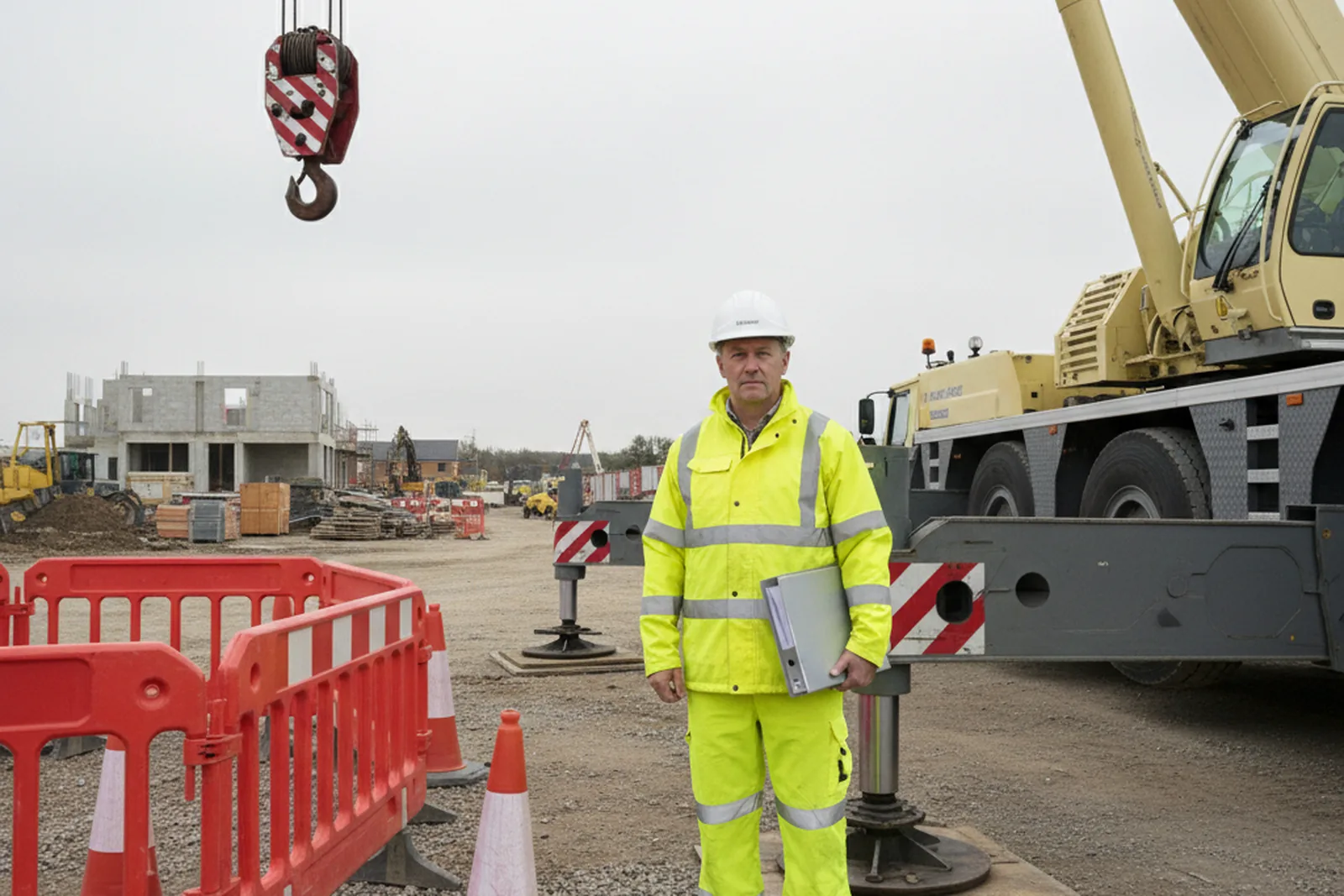
- Mobile cranes — most load charts permit operation up to around 9–14 m/s (20–31 mph) depending on machine, boom length and configuration; long-boom and luffing configurations sit at the bottom of that range or below it. The chart for the specific duty governs.
- Tower cranes — typically in-service up to around 20 m/s (45 mph) per manufacturer, with the crane put out of service (slew brake released to weathervane) beyond it. Site rules often stop lifting well before the machine limit.
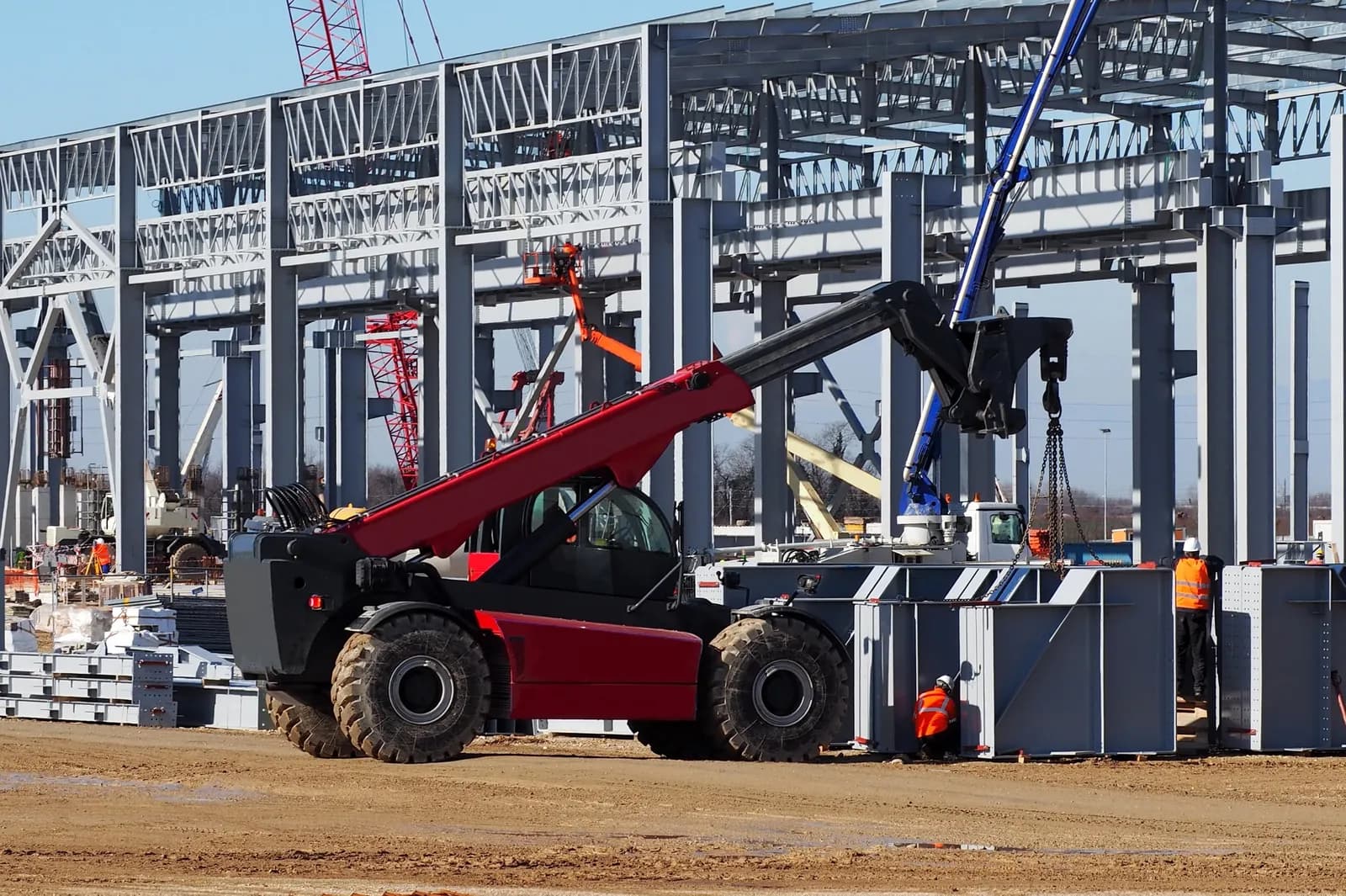
- Telehandlers and excavators lifting suspended loads — manufacturers commonly restrict suspended-load duties to around 10 m/s; check the object-handling section of the manual, not the forks/bucket pages.
- MEWPs — most boom and scissor lifts are rated to 12.5 m/s; relevant whenever the lifting operation uses a MEWP for rigging or landing.
Treat every figure above as a ceiling for a standard load — then read on, because the load usually matters more than the machine.
Why the Load Changes the Limit
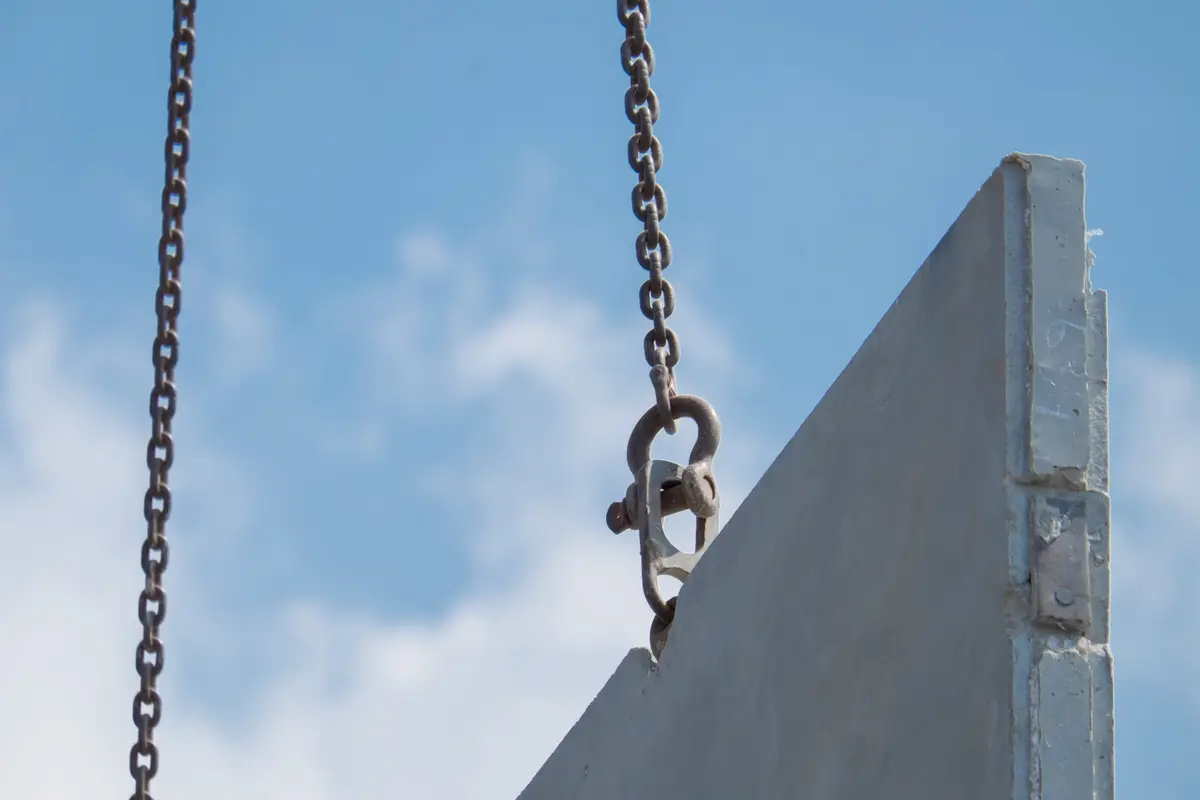
Load chart wind limits assume a load of limited surface area. Lift something with a big face — cladding panels, shutters, formwork tables, roof sheets, timber-frame panels — and the wind force on the load rises with its area while the crane's tolerance does not. Manufacturers publish de-rating tables or maximum load sail areas for this reason: a mobile crane rated to 11 m/s with a compact load may need the lift stopped at 7 m/s with a panel on the hook, or a bigger crane to keep margin. A load that starts to sail also swings, adds dynamic loading, drags the slinger on the tag lines, and lands where it wants rather than where you want.
Gusts, Means and Where You Measure
- Gusts govern, not averages. A 9 m/s mean with 15 m/s gusts is a 15 m/s lift. Plan to the gust value.
- Measure at the boom tip, not the ground. Wind speed increases with height — at 50m it is typically 1.3–1.5× the ground reading. Tower cranes carry anemometers at height; for mobile crane work, use the machine's anemometer or apply a height correction to forecasts.
- Local effects are real. Wind funnels between buildings and accelerates over slab edges — the forecast is a starting point, the site reading is the fact.
- Forecast the window, not the day. A compliant plan for a wind-sensitive lift names the forecast source, the limit for the operation, and who checks it — before the crane is mobilised, not after.
The Appointed Person's Stop/Go Framework
- Set the operational limit in the plan — the lowest of: the load chart limit for the configuration, any de-rated limit for the load's sail area, and the site rules. Write the number down; "monitor the wind" is not a control.
- Assign the measurement — who reads what, where, how often, and the gust value that pauses the lift.
- Pre-agree the stop — at the limit, the lift stops without a debate; loads made safe, boom to a safe configuration. The lift supervisor holds that authority on the ground.
- Re-plan, don't push on — if the window has gone, the operation is re-programmed. Every crane blown into the fence pushed through "one last lift".
Wind is one of the environmental factors a competent lift plan addresses alongside ground, proximity hazards and the load itself — the full contents are in our guide to what a lift plan contains, and wind-sensitive operations are a factor that can push a lift into the complex category requiring fuller planning.
Planning a Wind-Sensitive Lift?
Panels, sheets, frames or long-boom duties — we write site-specific lift plans with the wind limits, de-ratings and stop/go controls done properly. From £200, 24–48 hour turnaround, by a CPCS A61 Appointed Person.
Get a Quote TodayFrequently asked questions
What is the maximum wind speed for crane operations in the UK?
There is no single legal limit — the manufacturer’s load chart for the machine and configuration governs. Typical in-service limits are around 9–14 m/s (20–31 mph) for mobile cranes and around 20 m/s (45 mph) for tower cranes, with lower figures for long booms, luffing configurations and loads with large sail area. The lift plan should state the operational limit for the specific lift.
What wind speed stops a telehandler lifting suspended loads?
Check the object-handling section of the manufacturer’s manual — suspended-load duties are commonly restricted to around 10 m/s, lower than the machine’s general operating limits. Suspended loads swing and sail in wind in a way palletised loads on forks do not.
Do you use average wind speed or gusts for lifting?
Gusts. A 9 m/s mean wind with 15 m/s gusts must be treated as a 15 m/s condition, because the gust is what arrives mid-lift. Measure at height rather than at ground level — wind speed at a 50m boom tip is typically 1.3–1.5 times the ground reading — and treat forecasts as planning input, site anemometer readings as fact.
Why do large flat loads have lower wind limits?
Because the wind force on the load grows with its surface area. Cladding panels, formwork tables and roof sheets act as sails: they load the crane sideways, swing, and become uncontrollable on tag lines well below the machine’s chart limit. Manufacturers publish de-rating tables or maximum sail areas, and a competent lift plan sets a reduced operational wind limit for such loads.
Ricky Marsh
CPCS A61 Appointed Person | NEBOSH National Diploma | CertIOSH | MIIRSM | TIFSM
With 35 years of construction industry experience, Ricky provides expert lift planning and compliance services to contractors across the UK. Specializing in LOLER compliant lift plans, tower crane contracts, and steel erection planning.
Need a lift plan written? Plans from £200, 24-48h turnaround
07803 8080933 fields, 30 seconds. We reply within 4 working hours.